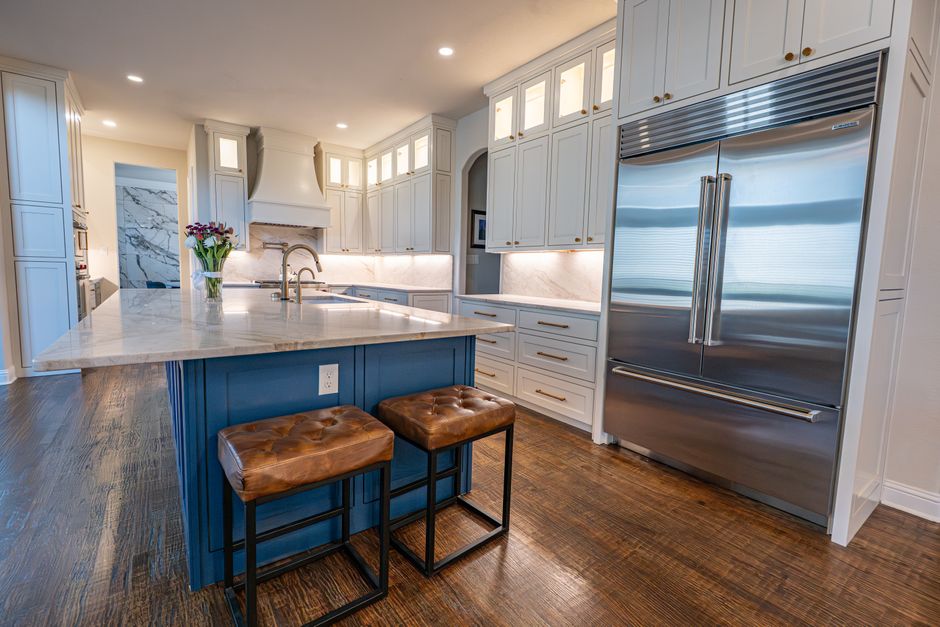

Kitchen Renovation in Carlsbad, CA

Notes from the crew on phasing a kitchen renovation in Carlsbad, CA, from layout and cabinet orders through demolition, inspections and the last punch list.

What We Cover

Kitchen Renovation in Carlsbad, CA

A kitchen renovation in Carlsbad, CA runs in phases, and the crew thinks about it that way from the first walkthrough. Demolition, rough-in, inspection, drywall, cabinets, counters and finish work each wait on the one before, and the house stays lived in while all of it happens. Phasing the job well decides whether the weeks feel orderly or chaotic.

How the crew phases the work

The first phase is paper: layout, cabinet order, appliance specs and a plan for where the water, gas and power go. Cabinets are often ordered before a single wall is opened, since the wait for delivery sets the date for tear-out. Then the room is stripped to studs, the trades place their lines, and the city inspects before anything is covered.

Living through it in a coastal neighborhood

Homes near Carlsbad State Beach, La Costa and the lagoons bring their own details: damp mornings, older slabs, patios that double as a temporary kitchen. A dust barrier, a microwave on its own circuit and a grill on the patio carry most households through the weeks without a sink. Loading and delivery days are planned around neighborhood parking and trash pickup.

What turns up behind the walls

Older houses in San Diego County hide undersized panels, galvanized pipe and small leaks, and a good schedule leaves a few days for repairs that nobody could see at the start. Surprises found early cost days. Surprises found after drywall cost trades a second trip.

Guides

The pages here cover layout planning, cabinet ordering and lead time, coastal air and materials, wiring and plumbing in older homes, setting up a temporary kitchen, and the order of trades from demolition to punch list. Two longer articles cover staging a remodel in stages and planning around the Carlsbad calendar.

Latest Guides

A remodeled home kitchen with cabinets and counters

How to split a kitchen renovation into stages without wasting labor

2026-10-06

A kitchen renovation does not have to happen in one continuous push. In a house that stays occupied, the work can be cut into stages, with a pause between them and a working kitchen at the end of each one. The trick is knowing where the natural seams are, because some cuts cost almost nothing and others double the labor. This article walks through the stages of a kitchen renovation in Carlsbad, CA, and how to decide which parts can wait.

Why would anyone split a kitchen renovation into stages?

Three reasons come up again and again. The first is living: a household with school-age kids, a home office or an elderly parent cannot always survive six or eight weeks without a sink. The second is ordering: cabinets, stone and appliances arrive on their own schedules, and a crew that insists on a single continuous push ends up standing around waiting for a delivery. The third is the house itself. Older homes between Carlsbad village and La Costa often need electrical or plumbing work that has nothing to do with the finish level of the kitchen, and that work is easiest to finish first and inspect before anything pretty goes on top of it.

Staging has a cost. Every restart means setting up dust barriers again, moving the temporary kitchen, and paying a trade for a second mobilization. A staged job almost always takes more total calendar time than a continuous one, even when it takes fewer days of actual labor. The decision is a trade between disruption now and total duration, and it is made house by house.

What is the natural order of stages?

Most staged kitchens in San Diego County follow some version of the sequence in this table. The right column shows what has to be true before the next stage can begin.

StageWhat happensWhat must be finished first
InfrastructurePanel work, new circuits, supply and drain lines, gas, vent ductLayout approved and drawn
Envelope repairFraming fixes, subfloor repair, window or door changesWalls opened and inspected
SurfacesDrywall, paint, flooringRough-in inspection passed
Cabinets and countersBoxes set, stone templated, fabricated and installedSurfaces dry and floors protected
FinishBacksplash, plumbing fixtures, devices, appliances, punch listCounters in place

Each row depends on the one above it. A pause between rows is safe. A pause inside a row, such as halfway through hanging drywall, usually causes problems because the work is partly open and partly covered.

Where can a pause happen without damage?

The cleanest seam is right after the rough-in inspection passes. At that point the plumbing, gas and electrical work is finished, signed off and visible, and nothing beautiful has been installed yet that could be damaged by a long wait. A household can sit at this point for a few weeks while cabinets are being built, and a plywood sheet over the subfloor and a temporary sink are enough to keep the room usable.

The second clean seam is after drywall and paint, before any cabinets arrive. The room is a blank box, which makes it simple to store materials in and easy to protect. Floors can be installed here, and many homeowners choose to do the floor as its own small stage, since the kitchen floor can be walked on and lived with while the cabinet order is still in production.

The third seam is after the cabinets and appliances are in and the countertop template is waiting on a fabricator. Here the kitchen is partly usable: a refrigerator is hooked up, a temporary sink can sit on a base cabinet, and a range can be connected. The lead time for stone or engineered quartz is normally measured in weeks, and that wait is the most common reason for a pause at this point.

What should never be paused halfway?

Some work does not survive a stop. A wall opened for plumbing cannot sit for a month with its insulation exposed in a damp coastal climate. Near Batiquitos Lagoon and Agua Hedionda Lagoon, where morning humidity is a regular feature of the year, bare wood and open framing take on moisture, and drywall that goes up on damp framing invites trouble later. Tile setting has the same problem: a floor that is partly tiled and partly bare cannot be used, and the thinset on the finished portion has to cure undisturbed.

Gas and electrical work also should not stop with open junctions. Any circuit that was live before the work started needs to be either capped and labeled or fully finished before the crew leaves for a long gap. Inspectors in San Diego County check this at rough-in, and a house that sits half-wired for weeks is a risk for anyone who finds a loose conductor.

How do the decisions get made in the right order?

Staging depends on early decisions made once and kept. Finish selections, appliance specs, cabinet layout and outlet positions all have to be settled before the first stage starts, even when the visible work will not happen for months. A homeowner who picks the cabinet door style after the rough-in has already passed has to live with wiring placed for a different plan. Appliance cutout dimensions are the biggest source of trouble: a range hood that moves two inches changes the duct, the cabinet and the backsplash all at once.

  • Choose the refrigerator model before the framing for its enclosure is built, since depth and clearance vary from brand to brand.
  • Pick the faucet and sink together, because the number of holes in the stone has to match the fixture.
  • Confirm the range and hood specs before the duct goes in, as the duct size depends on the hood's blower.
  • Mark the outlet heights on the drawing, since the backsplash height and the outlet cover alignment come from that single note.

How does a temporary kitchen change between stages?

The temporary kitchen is not a single setup. In the first stage, with plumbing off and walls open, it lives in another room: a folding table, a microwave, a kettle and a bin for dishes. Between stages, with the infrastructure finished, a laundry sink or utility sink can handle dishes properly, and water to the refrigerator can come back. By the final stages a base cabinet with a temporary sink sits in its permanent place and the household is cooking on the new range even before the counters are fully done.

How does the Carlsbad climate help or hurt a staged job?

The mild coastal climate makes pauses easier than in places with hard winters. Nothing freezes, a plastic sheet over an opening survives for weeks, and outdoor cooking is possible through most of the year. The same climate brings its own risks. Marine layer mornings keep surfaces damp, and a slab floor can hold moisture that shows up in finished flooring later. Plywood and drywall stored in a garage near Carlsbad State Beach pick up humidity quickly if they sit on the floor, so stacked materials should be raised on pallets and kept flat.

What does a schedule look like with a pause built in?

A good staged schedule marks the pause as a planned item, not as a delay. The cabinets are ordered at the start. Rough-in and inspection happen in the first window. While the cabinets are in production, drywall, paint and flooring go in during a short second window, and then the house returns to normal life for a stretch. When the cabinets are ready, the crew returns for a third window that covers installation, templating and the stone install. The final window handles the backsplash, plumbing fixtures, appliances and the punch list.

Each window has a start date, a defined list of tasks and a defined end condition, such as a passed inspection or a working sink. Without those end conditions, a staged job drifts, because nobody can say when a window is over. A written end condition for each stage lets the household and the crew agree on when the house goes back to normal.

What is the simplest way to decide?

Look at three things: how long the household can go without a kitchen, how long the longest order takes to arrive, and whether the house hides work that has to be finished first. When the delivery wait is longer than the household can tolerate with an empty room, a pause makes sense. When the house is old and the walls hide unknowns, a first stage that focuses on the infrastructure gives the most information at the least cost. When neither applies, a continuous job is usually shorter and cheaper in labor. Staging is a tool for specific problems, not a default.

Read more →

A remodeled home kitchen with cabinets and counters

Planning a kitchen renovation around the Carlsbad calendar

2026-10-06

Calendars matter in remodeling more than people expect. A kitchen torn open in late November, a stone delivery landing the week of a street fair, a crew trying to park near the beach on a July Saturday: each of these turns a plan on paper into a different job on the ground. Carlsbad has a calendar of its own, shaped by the coast, the tourist season and the way neighborhoods are laid out. This article covers how that calendar affects a kitchen renovation and how to plan the phases around it.

Does the time of year change how a kitchen renovation goes?

It does, though less than in colder regions. A coastal Southern California climate means no frozen pipes, no mud season and few weather delays. What changes through the year is access, humidity and how busy the trades and suppliers are. Summer brings traffic to the beach areas and long days for crews. Winter brings the occasional storm, shorter days and the holidays, which are the hardest part of the calendar for any kitchen project, since a household without a kitchen in December feels it more than one without a kitchen in March.

A project that starts in early fall usually has its demolition and rough-in finished before the holidays, with cabinets arriving as the new year starts. That timing keeps the messy phases away from guests and puts the finish work in the quieter months of winter and spring.

What is the marine layer, and why does a remodeler care?

The marine layer is the low cloud that rolls in off the Pacific, common along the Carlsbad coast in late spring and early summer. Locals call the stretch of gray mornings by nicknames, and the effect on a job is practical. Paint and caulk dry more slowly on a damp morning. Exterior work such as a new vent cap or a replaced window takes longer to cure. Tile adhesive and grout need time and a stable surface, and a crew that rushes them on a humid day risks weak bonds.

Homes near Carlsbad State Beach and the lagoons feel this more than homes inland, where the air dries out sooner. Finish stages that depend on curing, such as painting cabinet boxes or sealing stone, are better scheduled for the afternoon, or for months with drier air. The material itself does not change; the waiting time does.

How does tourist season affect deliveries and parking?

Carlsbad is a destination. Visitors arrive for the beaches, the flower fields in spring and Legoland California, and the traffic that comes with them touches residential streets in ways that matter to a delivery truck. A cabinet delivery is a large truck, usually with a liftgate, and it needs a place to stop. On streets near the coast with limited parking, that truck may need to unload in the early morning, before the day's traffic builds.

Planning for access is a small part of the schedule that causes disproportionate trouble. A few questions settle most of it:

  • Where can a box truck stop without blocking a neighbor's driveway?
  • Does the community have rules on delivery hours or on the days that trash is collected?
  • Is there a way to carry cabinet boxes in without crossing a landscaped area or a fragile entry?
  • Can the dumpster sit in the driveway, or does it need a street permit?

Planned in advance, these answers take an hour. Discovered on delivery day, they cost a rescheduled truck and a week.

What do homeowners' associations and neighbors need to know?

Many Carlsbad neighborhoods, especially planned communities in La Costa, have associations with rules on working hours, noise, dumpsters and contractor parking. Some require notice before a project starts. Even where no rule exists, a few words with neighbors before demolition keeps the relationship intact. Demolition is loud, and the first week of a remodel is the week with the most noise and dust.

A note posted to the adjacent homes with the start date and the expected length of the loud phase is a courtesy that tends to be returned. Crew start times matter as well, since an early truck idling outside a window is something people notice.

When is the best time to order materials?

Ordering early beats ordering well. Cabinets, stone, tile and appliances have lead times that depend on the supplier's queue, and that queue gets longer when many people want the same finishes. Spring is when many homeowners start projects ahead of summer entertaining, and suppliers tend to be busier. Orders placed in late winter go into a shorter queue. The decision to order is also a decision to commit to a layout, so the earlier ordering moves, the earlier the layout has to be final.

A rule that experienced crews use: the long-lead item sets the date. If the stone takes the longest, then the stone order comes first and the demolition date backs off from it. If a special-order range has the longest wait, then it goes first. The long pole holds the tent, and the schedule hangs from it.

How do holidays and family events fit in?

A remodel schedule works best when the household names its fixed dates before the first day of work. Graduations, family visits, a wedding in the backyard and school breaks all matter. A kitchen that is supposed to be finished by Thanksgiving needs a start date that leaves room for the surprises that turn up when a wall opens. A common mistake is to plan to the day, with no slack, and then to be unhappy with a delay that was always likely.

Building slack in is not pessimism. A kitchen schedule has a few places where outside parties control the clock: the inspector, the stone fabricator, the supplier's truck. Adding a week of slack before a fixed event takes the pressure off everyone, including the crew.

Frequently asked questions about timing

Is summer a bad time to remodel a kitchen in Carlsbad?

Summer works fine for the work itself. The days are long, the weather is dry and crews can run full days. The trade-offs are traffic near the coast and the fact that many households travel, which can make it easier to stage a job while the house is empty.

Does rain stop a kitchen job?

Rarely. Interior work goes on in rain. What matters is any exterior opening: a window out of its frame, a roof penetration for a new vent, or an exterior door being replaced. These get tarped or sealed on days with weather in the forecast.

Should the kitchen be done before a big gathering?

If the event has a fixed date, the finish should be done a week ahead, with the punch list closed. A kitchen that gets its last appliance on the afternoon before a party leaves no room for problems.

Can a job pause for a vacation?

Yes, at a clean seam. After the rough-in inspection passes is a good point, or after drywall and paint. Pausing in the middle of a stage, with walls half-open, causes more trouble than the break is worth.

What does a calendar-aware plan look like?

It starts with the fixed dates and works backward. The household names the events that matter, the crew names the long-lead items, and the two lists are laid over a calendar that includes tourist traffic, school breaks and the damp months. From that picture comes a start date, a pause point and a target finish with some slack. A kitchen renovation in Carlsbad, CA is easier to live through when the calendar is treated as one more material on the job.

Read more →